
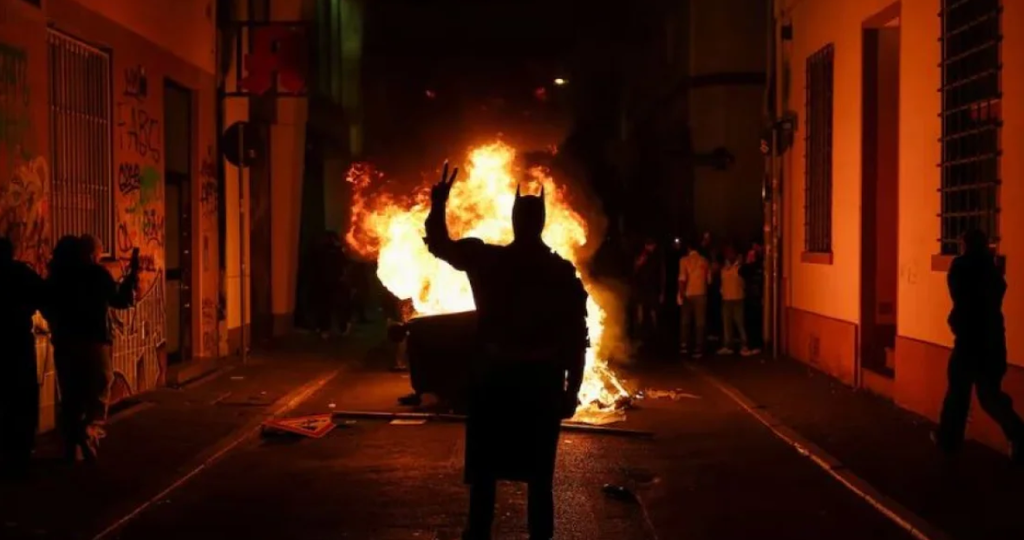
Germany witnessed widespread youth-led demonstrations on Saturday, October 31, as thousands of people took to the streets in more than 30 cities to demand better education, lower living costs and greater attention to the concerns of younger generations. However, what began largely as peaceful protests later turned violent in several locations, with reports of looting, vandalism and clashes with police.
The demonstrations were organised by a campaign group called “Gen Z regelt!”, which translates roughly to “Gen Z takes charge.” The movement called for increased investment in education, opposition to compulsory military service and a fairer distribution of economic responsibilities.
Protests took place in 34 cities, including Berlin, Frankfurt and Munich. Participants expressed frustration over rising living expenses, deteriorating school facilities, public spending cuts and growing concerns about the country’s military policies.
The most serious incidents occurred in Frankfurt, Germany’s financial centre. As tensions escalated in the evening, groups of masked individuals attacked shops, smashed storefront windows and looted several businesses. At least two stores were reportedly looted, while police faced attacks involving stones, fireworks and Molotov cocktails.
Authorities responded with water cannons and pepper spray as they attempted to regain control of the situation. Several police officers were injured, and emergency services also came under attack.
Violence was also reported in Cologne and Hamburg. In Cologne, demonstrators reportedly threw bottles, fireworks and other objects at police officers. Authorities used water cannons to disperse violent groups. In Hamburg, masked individuals set fire to construction barriers and rubbish bins.
Berlin also experienced isolated disturbances, with police reporting that officers were targeted with bottles and other objects during a separate evening demonstration.
Despite the unrest, organisers maintained that the movement was intended to remain peaceful. The “Gen Z regelt!” campaign publicly distanced itself from violence, extremist groups and vandalism, arguing that such incidents undermined the movement’s original demands.
According to police estimates, approximately 18,000 people participated in demonstrations in Frankfurt, Munich and Berlin, while organisers had expected around 36,000 across those cities. The campaign group claimed that more than 100,000 people took part nationwide.
The protests reflect growing frustration among young Germans over economic pressures, educational challenges and political decisions that they believe fail to adequately consider their future.
The movement has also drawn attention to wider youth-led demonstrations taking place across Europe, particularly in France and Italy.
German authorities have promised a thorough investigation into the violent incidents and warned that those responsible for attacks and looting will face legal consequences.
Meanwhile, the organisers have indicated plans to participate in further Europe-wide youth protests scheduled for November 20.
The events have highlighted the growing influence of Generation Z in European political movements, while also raising concerns about the potential for peaceful demonstrations to be overshadowed by violence.
Reporting by Admin for The Borderless Journal. Filed under Uncategorized · 01 Nov 2026, 21:00.