
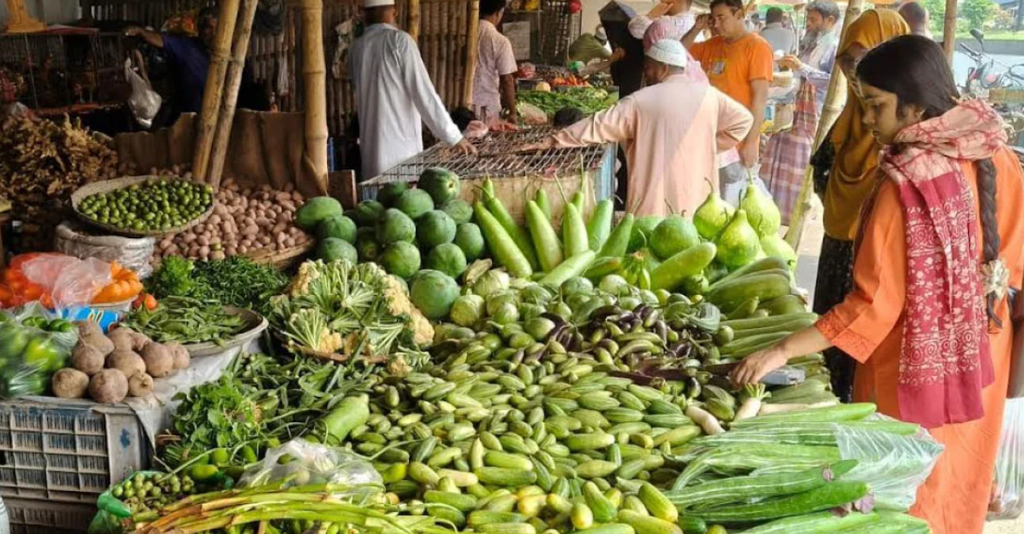
Rising prices of fish, vegetables and everyday essentials are putting increasing pressure on household budgets in Dhaka, forcing many families to cut back on food choices and struggle to meet basic living expenses.
At around 7:30 a.m. on Monday, October 26, Nazia Rahman arrived at Meradia Market after dropping her child off at school. She moved between fish stalls, looking for affordable options, but found that even smaller fish had become expensive.
“I am trying to buy small fish, but the prices are beyond my budget,” Rahman said. Vendors were asking Tk 750 per kilogram for tengra fish, with one offering it for Tk 720, while mola fish was priced at around Tk 500 per kilogram. Even small punti fish cost more than Tk 300 per kilogram.
Rahman, who lives with her husband and two children, said the rising cost of living was making it increasingly difficult to provide her family with a varied diet.
“How long can our children keep eating rohu, pangas and tilapia? Even when we want to give them something better to eat, we have to think carefully about the expense,” she said. She added that serving her children a special meal such as polao and roast could mean being unable to afford it again for weeks.
Her husband works at a private company, but his income is not enough to comfortably cover rent, children’s education, food and medical expenses while also supporting relatives in their village.
“When we cannot fulfil our children’s wishes, we end up crying silently. With the rising prices of everyday essentials, families like ours are struggling to keep up. It feels as though no one sees our silent tears,” she said.
Another shopper, Ayesha Begum, said middle-income households earning around Tk 40,000 a month were also facing mounting financial pressure. Many could neither afford better housing and living standards nor comfortably manage their existing expenses.
She added that lower-income families were struggling as well, with many unable to maintain adequate diets and living conditions.
Conversations with shoppers at the market reflected widespread frustration over the cost of rice, lentils, flour, fish and other household necessities.
Fish prices remain a major concern
Fish seller Mintu said the cost of bringing fish to Dhaka had risen significantly, contributing to higher retail prices.
Fresh rohu and catla, commonly transported from northern Bangladesh, previously sold for Tk 220–250 per kilogram, with larger fish priced at around Tk 300. Prices now range from Tk 360 to Tk 380 per kilogram, he said.
Transport expenses have nearly doubled, according to the seller, who said traders were also affected by rising costs and could not continue selling at a loss.
“Like everyone else, we are suffering too. I sell fish, but I also have to buy food for my own family,” he said.
Vegetable prices ease, but essentials remain expensive
Vegetable prices at the market remained largely unchanged on Monday, although some items had become cheaper compared with the previous few days.
According to market observations, prices per kilogram included:
- Pointed gourd: Tk 60
- Potatoes: Tk 35
- Bitter gourd: Tk 80–100
- Teasel gourd: Tk 80
- Snake gourd: Tk 50
- Ridge gourd: Tk 70
- Eggplant: Tk 80–130
- Tomatoes: Tk 150
- Green beans: Tk 120
- Okra: Tk 50
- Cauliflower: Tk 60
- Radish: Tk 60
- Papaya: Tk 30
Tomatoes had reportedly sold for around Tk 250 per kilogram a few days earlier. Prices of several gourds and yardlong beans had also declined, with yardlong beans now selling for Tk 60–70 per kilogram, down from Tk 100–120.
However, other essential products remained costly. Two kilograms of flour that previously cost Tk 140 were selling for Tk 180. Packaged flour had risen from Tk 65 to Tk 70, while loose flour cost Tk 40–50 per kilogram. Sugar was selling for Tk 110 per kilogram.
Prices of household cleaning products had also increased. Wheel detergent powder rose from Tk 145 to Tk 155 per kilogram, while a Wheel soap bar increased from Tk 30 to Tk 35.
Loose rice was available from Tk 50 per kilogram for the lower-priced Guti Swarna variety. Eggs had fallen by Tk 10 per dozen to Tk 140, while ginger prices had risen from Tk 160 to Tk 180–200 per kilogram. Garlic was selling for Tk 200 per kilogram, up from Tk 180.
Coarse lentils cost Tk 100 per kilogram, while finer varieties were priced at Tk 150–160. Rice used for polao was selling at close to Tk 200 per kilogram.
Shoppers call for government action
Consumers warned that the continued rise in essential commodity prices was making everyday life increasingly difficult, particularly for auto-rickshaw drivers, rickshaw pullers and manual labourers whose incomes are often limited.
Some traders have also warned that prices could rise further, adding to concerns among households already struggling to balance income and expenditure.
Shoppers called on the government to take effective measures to address rising market prices and ease the financial burden on ordinary people.
Reporting by Borderless for The Borderless Journal. Filed under Uncategorized · 26 Oct 2026, 16:00.