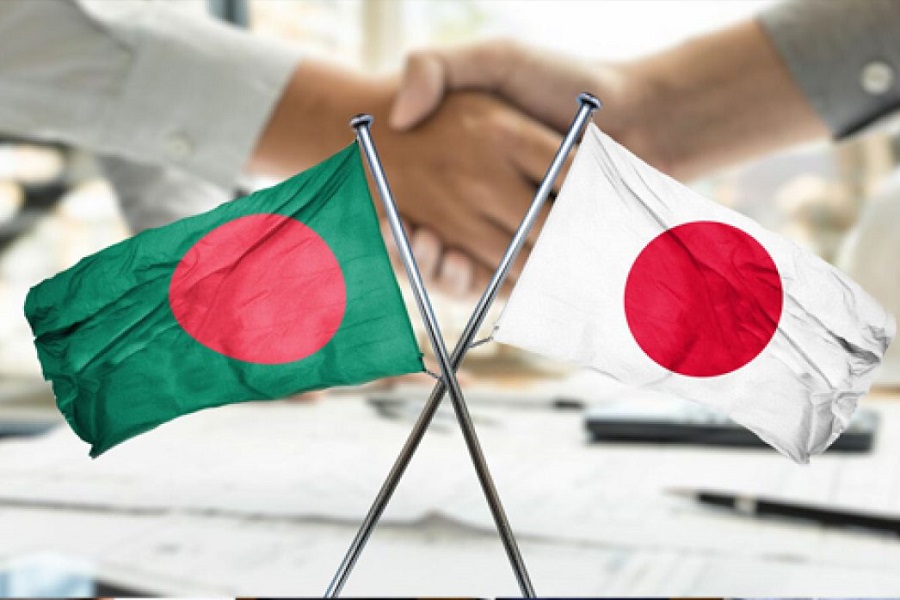
Bangladeshi workers could gain access to new overseas employment opportunities in Japan from April 1, 2027, following the signing of a bilateral agreement aimed at strengthening recruitment cooperation, improving skills development and ensuring better protection for migrant workers.
Bangladesh and Japan finalised the Employment Skills Development Memorandum of Cooperation (ESDP-MOC) on October 17, concluding nearly a year of efforts by Bangladesh’s Ministry of Expatriates’ Welfare and Overseas Employment and the Japanese government.
The agreement establishes a framework for closer cooperation between the two countries in recruiting and receiving workers from Bangladesh. It also places particular emphasis on workers’ rights, professional development and access to legal protection while employed in Japan.
Under the arrangement, recruitment of Bangladeshi workers is scheduled to begin on April 1, 2027. The agreement is expected to create additional opportunities for Bangladeshi citizens seeking employment abroad while strengthening the countries’ existing relationship in the labour sector.
The agreement was signed on behalf of Bangladesh by the secretary of the Ministry of Expatriates’ Welfare and Overseas Employment. Representatives of Japan’s Ministry of Justice, Ministry of Foreign Affairs, Ministry of Health, Labour and Welfare, and National Police Agency signed on behalf of the Japanese side.
The document is expected to be formally exchanged during Prime Minister Tarique Rahman’s upcoming visit to Japan, according to the report.
The agreement will initially remain in force for five years, with an automatic extension for another five years. If extended as planned, the arrangement could remain in effect for a total of 10 years.
A key feature of the agreement is its emphasis on protecting Bangladeshi workers and ensuring that recruitment and employment arrangements are handled through closer cooperation between the two governments.
Expatriates’ Welfare and Overseas Employment Minister Ariful Haque Chowdhury said the two countries would work to ensure the highest possible level of protection for workers and strengthen cooperation in sending and receiving employees.
He also expressed hope that employment opportunities in Japan would help Bangladeshi workers develop their professional skills, improve their earning potential and potentially create opportunities for longer-term residence in the country.
According to the report, workers covered by the agreement are expected to receive legal protection equivalent to that provided to local Japanese employees. The arrangement also highlights equal opportunities for men and women in the workplace.
Specific provisions address the treatment of female migrant workers during pregnancy and after childbirth. Employers would not be permitted to dismiss foreign workers or discriminate against them because of pregnancy or childbirth. The agreement also does not include a mandatory provision requiring women to return to their home countries for those reasons.
These protections are particularly relevant for migrant workers, who can face difficulties understanding local employment laws, accessing support services and protecting their rights while working overseas.
For Bangladesh, Japan represents a potential destination for expanding overseas employment beyond the traditional labour markets used by many Bangladeshi migrant workers. Stronger institutional cooperation could help improve recruitment procedures and provide a more structured framework for employment opportunities.
However, prospective applicants should distinguish between the signing of a recruitment cooperation agreement and the opening of specific job vacancies. The announcement does not itself establish the number of workers to be recruited, the occupations available, salary levels, language requirements, application procedures or individual visa eligibility.
Applicants will need to follow official recruitment announcements and meet the relevant requirements for their chosen jobs. They should also verify recruitment agencies and avoid paying unverified intermediaries who promise guaranteed employment or visas.
The agreement is expected to contribute to the development of Bangladesh’s skilled workforce while strengthening bilateral relations with Japan. If implemented effectively, it could provide a framework for more secure employment opportunities and help workers build professional experience in the Japanese labour market.
With recruitment scheduled to begin in April 2027, attention will now turn to the practical implementation of the agreement, including the recruitment process, eligible job categories and the procedures Bangladeshi applicants will need to follow.
The initiative marks a new step in Bangladesh and Japan’s employment cooperation, with worker protection, skills development and access to overseas jobs at the centre of the arrangement.
Reporting by Borderless for The Borderless Journal. Filed under Uncategorized · 19 Oct 2026, 15:00.