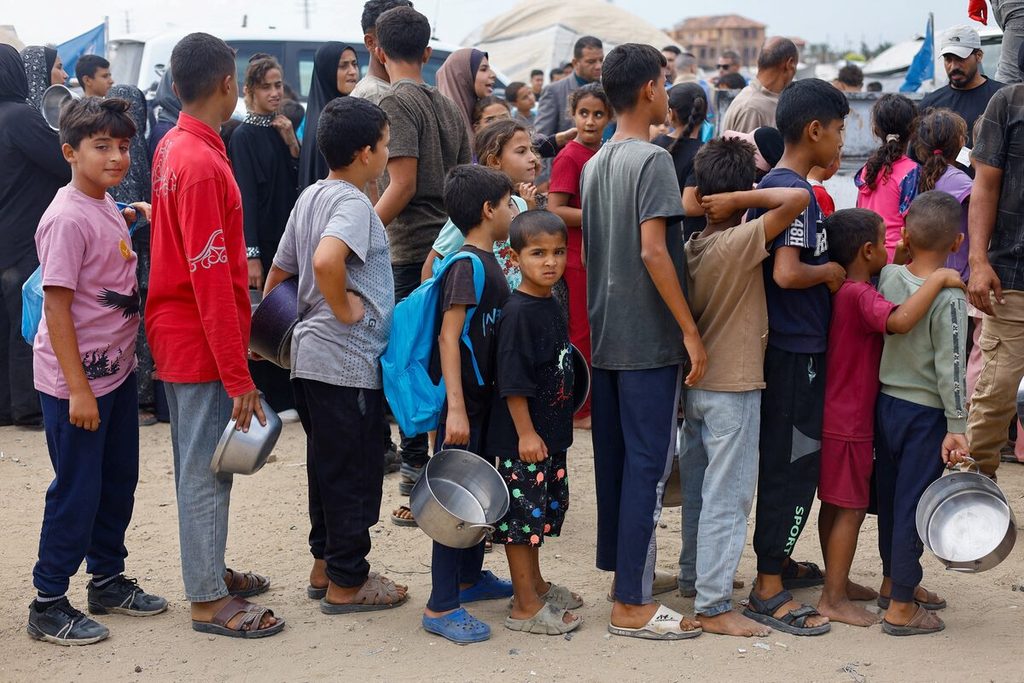
The United Nations World Food Programme (WFP) has been forced to cut food assistance to around 500,000 Palestinians in Gaza because of a severe funding shortage, raising fresh concerns about hunger as winter approaches.
The agency announced on October 19 that it would reduce the number of people receiving monthly food and cash assistance in Gaza from 1.6 million to 1.1 million. The decision comes as many families continue to struggle to access basic necessities after years of conflict and displacement.
The cuts will also affect families who remain eligible for assistance. Food rations have been reduced by half, meaning households that previously received two food parcels will now receive just one, along with smaller quantities of wheat flour.
The number of hot meals distributed daily will also fall from 250,000 to 150,000. In hard-to-reach areas, including locations near the Israeli military-controlled zone known as the Yellow Line, some families will receive hot meals every other day instead of daily.
The WFP said it received less than half the funding for its Palestine operations in 2026 compared with previous years. It urgently needs $450 million to maintain essential operations in Gaza and the West Bank over the next six months, from October 2026 to March 2027.
Despite some improvements in food security following the October 2025 ceasefire, the agency warned that the progress remains fragile and could quickly be reversed if humanitarian funding continues to decline.
According to the WFP, around 1.4 million people in Gaza—approximately 67% of the population—are facing acute food insecurity at crisis levels or worse. More than 80% of residents are unemployed, leaving many families unable to afford nutritious food even when it is available.
The approaching winter is adding to the urgency, with displaced families still facing shortages of adequate shelter and essential services. The agency has warned that further reductions in assistance could increase the risk of hunger and malnutrition, particularly among children and pregnant and breastfeeding women.
The WFP is urging the international community to provide additional funding to sustain food assistance and protect vulnerable families from a worsening humanitarian crisis.
Reporting by Borderless for The Borderless Journal. Filed under Uncategorized · 20 Oct 2026, 15:00.