New research suggests that murders involving Black victims are more likely to remain unsolved than those involving white victims.
An analysis of unresolved homicide cases in London from 2019 to 2023 has revealed a significant racial disparity. People from minority ethnic backgrounds accounted for 61.7% of all reported homicide victims, but they represented 92.9% of victims in cases that remained unsolved.
During the same five-year period, Black people accounted for around 40% of all homicide victims, but made up 73% of those whose murders remained unresolved. Black victims also represented 83.7% of unsolved shooting cases, with 36 victims, and 73.5% of unsolved stabbing cases, involving 39 victims.
The Metropolitan Police said the disparity is partly connected to lower levels of trust in the police among some Black communities. Authorities say they are working to rebuild that confidence and encourage more victims and witnesses to cooperate with investigations.
Metropolitan Police homicide commander Paul Brogden said serious violence disproportionately affects certain communities, particularly young Black men, who tend to have the lowest levels of confidence in the police. As a result, victims and witnesses may be less willing to approach investigators or provide information.
The research, carried out by Action on Armed Violence, also found that shootings are considerably more difficult to solve than stabbings. Between 2019 and 2023, London recorded an average of 124.6 homicides each year. Stabbings accounted for 65.3% of all killings, while shootings made up just 8.7%.
However, of the 41 murders during that period that remained unsolved, shootings accounted for 38%—more than four times their proportion among all homicides.
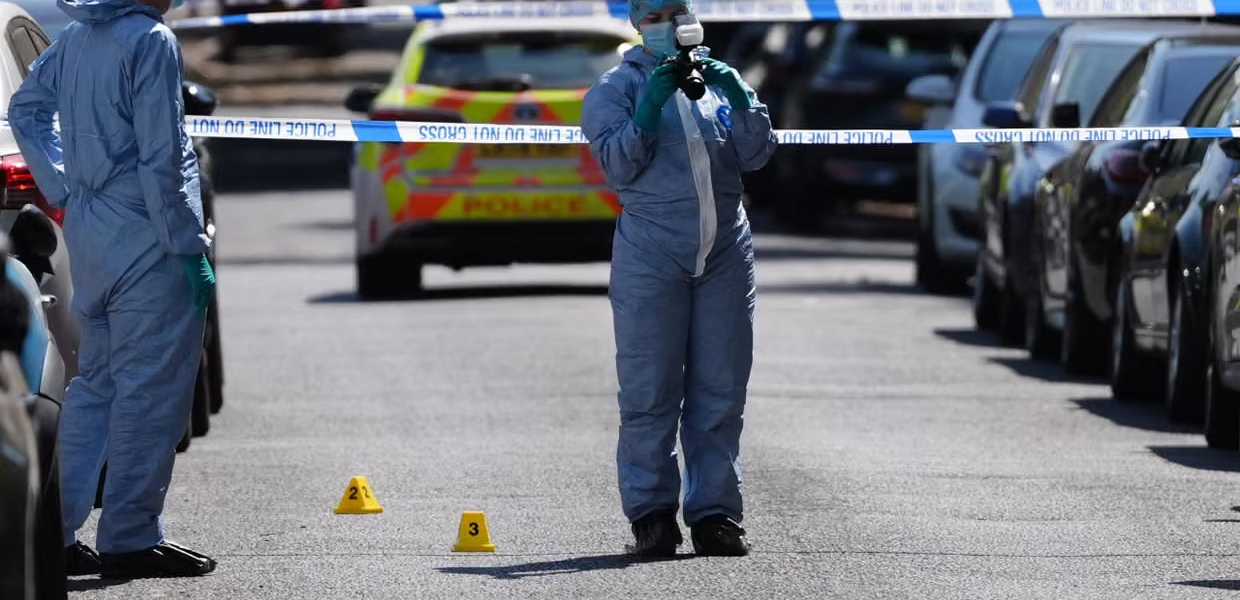
Brogden said investigations into street shootings and stabbings can be particularly complicated because identifying suspects often requires extensive investigative work. Police rely on tools such as CCTV footage and forensic evidence, but witness testimony can be crucial in identifying offenders and securing convictions.
Senior Scotland Yard homicide detective DCI Alex Gammampila said shootings are often more deliberate and planned than spontaneous knife attacks, making firearms-related investigations particularly challenging for detectives.
The research also found that unresolved homicide cases disproportionately involve younger victims. While the average age of a homicide victim in London is around 36, the average age falls to approximately 28 among victims whose cases remain unsolved.
Iain Overton of Action on Armed Violence said the findings indicate that unresolved murders in London are concentrated particularly among young Black men and cases involving firearms.
He said the findings could further damage confidence in the justice system among communities that are already heavily affected by violent crime. Families of victims may feel that the communities most exposed to deadly violence are also the least likely to see those responsible held accountable, potentially reinforcing perceptions of unequal treatment and protection under the law.
Despite these concerns, the Metropolitan Police maintains a high homicide detection rate, with around nine out of 10 killings resulting in a case being solved.
The Met recorded 97 homicides in London last year, compared with 153 in 2019, making it the lowest annual figure in more than a decade.
According to the study, London recorded 1,222 homicides between 2015 and 2024, of which 110, or around 9%, remained unsolved.
Reporting by Admin for The Borderless Journal. Filed under World · 25 Aug 2026, 13:18.